
Companionship
Companionship Isn't Just "Someone to Talk To"
A look at what companionship sessions actually cover, how they differ from medical home care, and why pairing them with tech help works well for a lot of our clients.

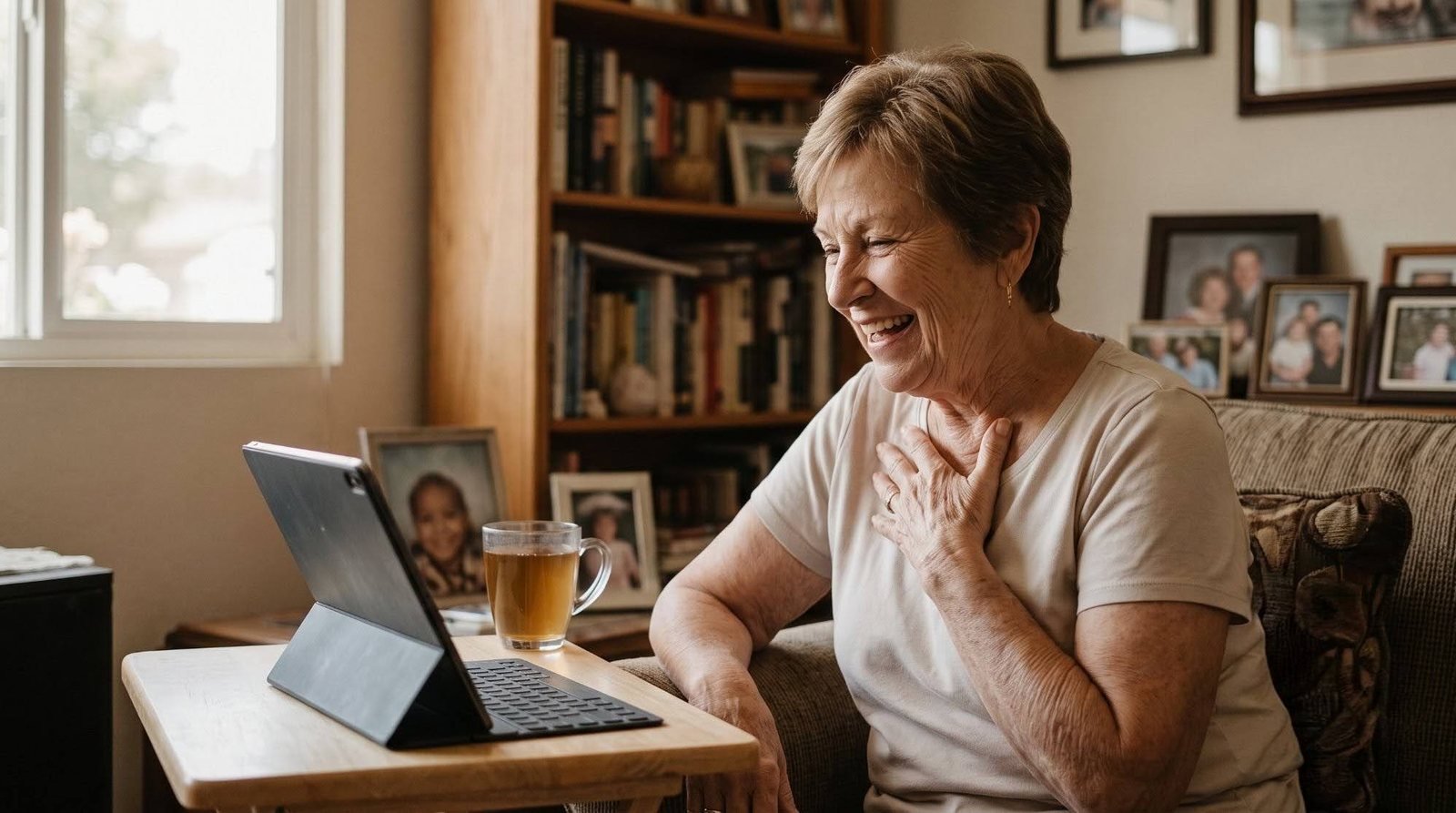
For Families · Blog
There is a real difference between knowing your parent is okay and watching their every move, and most families get stuck in the gap between those two things.
5 min read Orange County & Laguna Woods
You call your mom on a Tuesday and she does not pick up. By the third ring your stomach drops a little, even though she is probably just in the garden or left her phone in the other room. You call back an hour later, she answers, everything is fine, and you feel silly for worrying. Then it happens again next week.
That loop, worry, check, relief, repeat, is one of the most common things adult children tell us about, especially those who live an hour or a state away and cannot just swing by. It is why so many families look into location apps, fall-detection watches, or a kitchen camera. Those tools are not wrong to want. But they solve a narrower problem than most people think, and installing one without a real conversation usually costs more trust than it buys peace of mind.
A fall-detection watch is good at one thing: telling someone fast when your parent has hit the floor and cannot get up. A location app tells you where your dad is right now. A door sensor tells you whether the front door opened at 2 a.m. These are emergency tools, built for the sudden, discrete event, and for that they can be genuinely lifesaving.
What they cannot do is catch anything that happens slowly. A sensor will not notice your mom has stopped finishing her meals, that the mail is piling up on the counter, or that she is repeating the same story three times in one visit. Those things do not trip an alarm. They show up to a person who was there last month and can tell something has shifted.
Here is the part nobody says out loud enough: the push to add another camera or another tracking app usually comes from your worry, not from a real change in your parent's risk. That is not a character flaw. It is what happens when you love someone and cannot be in the room with them. Distance turns ordinary uncertainty into something urgent, and an app that promises to close that gap is an easy yes at midnight.
Naming that honestly is the useful move. It does not mean the worry is wrong. It means the real question is not just what tool solves this, but what would actually make you feel steady, and whether a watch on your mom's wrist gets you there.
Families who land somewhere workable have the conversation before they buy the device. Not "I ordered you a watch, it arrives Thursday," but a real talk about what specific worry is driving the request. Is it a fall? Wandering? Not answering the phone? Naming the actual fear makes it easier for your parent to respond to without feeling accused of being fragile.
From there, ask what they are actually comfortable with. Some parents are fine with a location app. Others find a camera in the living room unbearable, even one aimed only at the hallway. There is no universal answer, only the one this parent gives when asked directly. And it is not a one-time decision. Revisit it every few months, because what felt fine at seventy-eight might feel different at eighty-three.
A different kind of check-in
Book a companionship session and one of our background-checked coaches will spend real time with your parent, conversation, coffee, a walk around the block, the kind of visit that notices what a sensor never will.
This is where a companionship session earns its place next to the tech. When one of our coaches sits with your parent for an hour of real conversation, once a week or once a month, they are quietly doing the slow-stuff check-in a sensor cannot. They notice if the usual sparkle is missing, what is in the fridge, whether that same pile of mail has sat on the table for weeks.
None of that requires a lens pointed at your parent's kitchen, and none of it feels like being watched, because it is not watching, it is a person showing up. For a lot of families, a standing companionship visit does more real checking-in than the tech stack does, in a way your parent looks forward to instead of tolerates.
Sometimes, after that conversation, the family does land on a tool: a location app for a parent who still drives, a pendant after a close call, a doorbell camera because the neighborhood has had break-ins. That is a legitimate outcome too, and how it gets set up matters almost as much as what gets set up.
We can come to the house in Orange County or Laguna Woods and walk your parent through it in person, at their pace, so it is something they chose, not something that appeared on their phone one day. We will also tell you honestly if a simpler option would do the same job.
Talk it through with us
Call or email, tell us what is worrying you and what your parent has said about it, and we will help you think through what actually makes sense. No pressure, and no obligation.
(949) 994-2407Keep reading
Companionship
A look at what companionship sessions actually cover, how they differ from medical home care, and why pairing them with tech help works well for a lot of our clients.

For Families
You've got a few days, a long to-do list, and a parent who doesn't want to feel managed, so here's what's actually worth doing before your flight home.
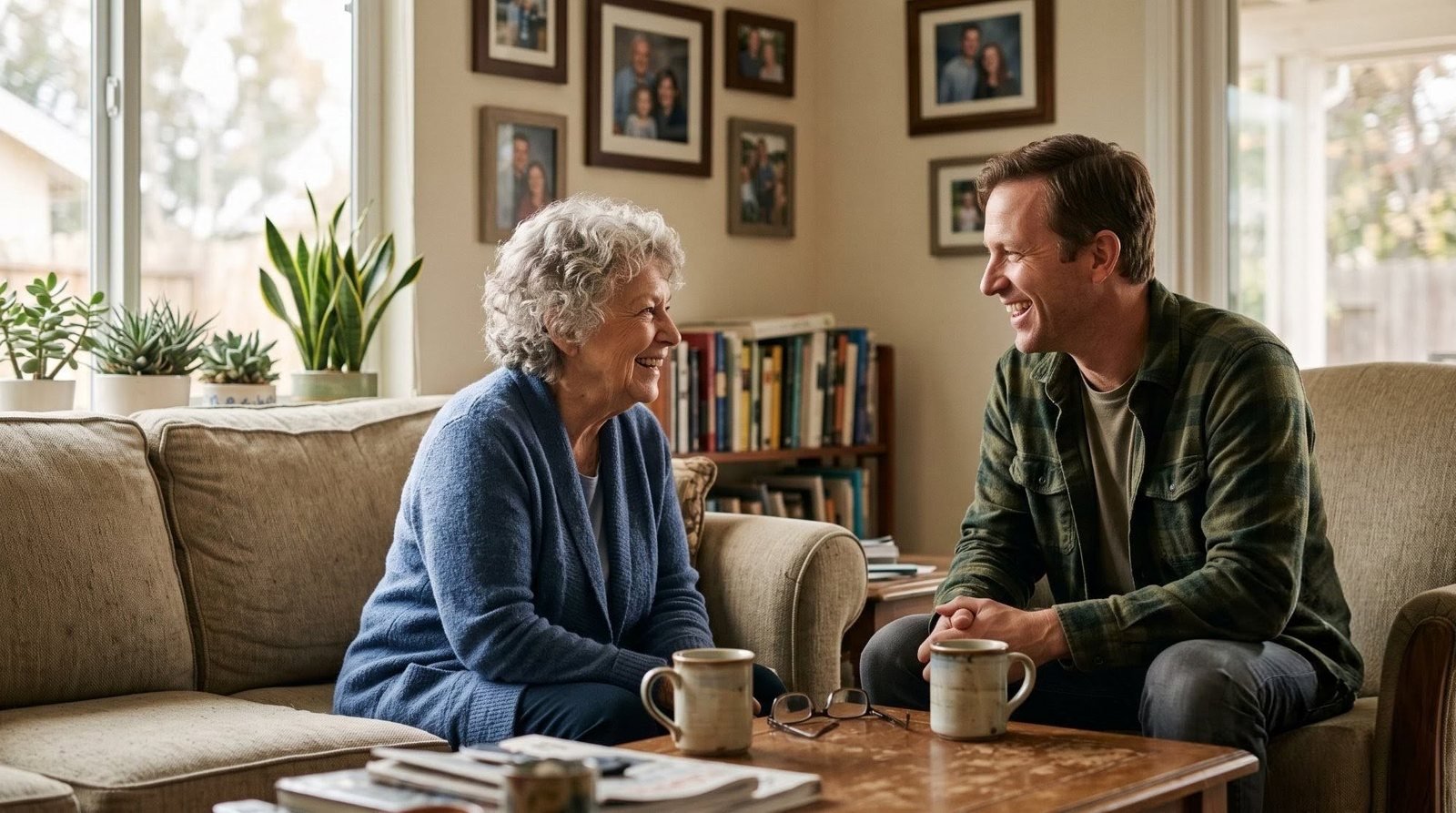
Companionship
Adult children want to know if a regular visit actually helps, and the research on loneliness in older adults says yes, plainly and specifically.