Online Safety
The Tech Support Scam Call: What to Do in the First 5 Minutes
What the fake virus pop-up and the fraud department phone call actually sound like, and the five things to do in the moment if it happens to you.

Online Safety · Blog
Holiday orders are on the way, and so are the fake "delivery problem" texts. They were the most reported text scam in the country last year. Here is the simple way to tell real from fake.
5 min read Orange County & Laguna Woods
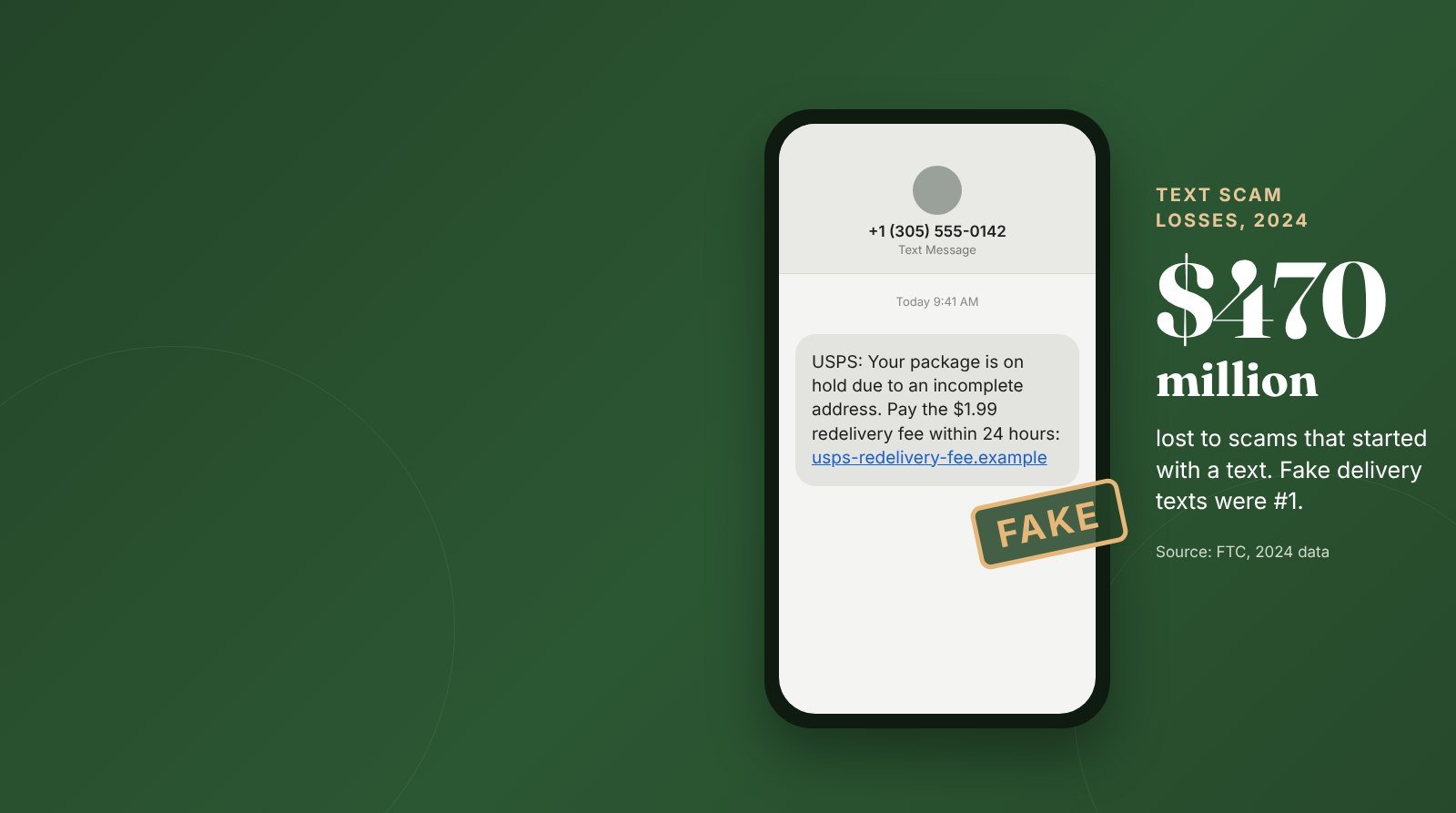
The text looks official. It says USPS, FedEx or UPS. Your package is on hold because of an incomplete address, or a delivery attempt failed, and you need to pay a small redelivery fee in the next 24 hours or it goes back to the sender. There is a link. And because you did order something last week, it feels completely believable.
That is exactly why this scam works so well this time of year. We see these texts on the phones of nearly every client we visit between October and January. The good news: once you know the pattern, they are one of the easiest scams to beat.
According to the Federal Trade Commission, people reported losing $470 million to scams that started with a text message in 2024. That is five times what was reported in 2020. And the single most reported type of text scam was the fake package delivery problem.
The dollar amount on the text is usually tiny, a dollar or two for "redelivery." That is on purpose. Nobody thinks twice about $1.99. But the page the link opens is a copy of a real shipping website, and what the scammer really wants is everything you type into it: your name, address, card number, and sometimes your date of birth or Social Security number.
The U.S. Postal Inspection Service is very clear on this. USPS will not send you a text or email unless you first signed up for updates with a tracking number. And even then, a real USPS text will not contain a link.
So if a "USPS" text shows up with a link in it, you already have your answer. You do not need to study the web address or check the grammar. It is fake.
FedEx and UPS do send tracking texts with links when you sign up for them, which is why the habits below matter more than any one rule.
Red flags in a delivery text
1. Don't tap the link. Not even to "just look." Even if you are expecting a package. The FTC's advice is simple: if a text about a delivery is unexpected, don't click and don't reply.
2. Check tracking where you ordered. Open the Amazon app, the store's website, or the email receipt you got when you placed the order, and look up the tracking there. If there is a real problem with the delivery, it will show up there too.
3. Report it, then delete it. Forward the text to 7726 (it spells SPAM on the keypad). That goes to your phone carrier so they can block similar messages. Most phones also have a "Report Junk" or "Report spam" option right in the Messages app. If the text pretends to be USPS, you can also email a screenshot to spam@uspis.gov showing the phone number and date.
One more tip that saves a lot of headaches: your phone has a setting to filter texts from people who are not in your contacts into a separate list. It doesn't block anything, it just keeps the junk out of your main inbox. We set this up during visits all the time.
Free printables
Our free guides are large print and made to be printed: a scam checklist, a family code word card and more.
Want your phone set up to filter these out? We will come to you and do it together.
First, don't panic and don't feel foolish. These pages are built to look exactly like the real thing. What to do next depends on how far you got:
This scam works because it lands at the exact moment real delivery texts are everywhere. Between gifts you ordered and gifts family is sending you, a "delivery problem" text doesn't feel strange at all. Scammers know that, and they send more of these from late October through the new year.
The fix is not to be suspicious of everything. It is one small habit: check tracking where you ordered, never through a text. Do that every time and this whole category of scam goes away.
Delivery texts are one piece of a bigger holiday picture. The tech support scam call and the AI voice cloning grandparent scam use the same playbook of urgency and pressure. And if you want the big picture, see what the FBI's 2025 numbers show for California.
Ready When You Are
Call or email, tell us what's giving you trouble, and we'll take it from there. No pressure, and no obligation.
(949) 994-2407Keep reading
Online Safety
What the fake virus pop-up and the fraud department phone call actually sound like, and the five things to do in the moment if it happens to you.
Online Safety
A scammer only needs a few seconds of your grandchild's voice to fake a panicked call. One family code word shuts it down.

Online Safety
When it feels like everything is on fire, here's the exact order to do things in, and why it matters.