
Computers
Should You Buy Your Parent a New Laptop, or Fix the Old One?
A decision framework for adult children weighing cost and effort, not another list of the year's best laptops.

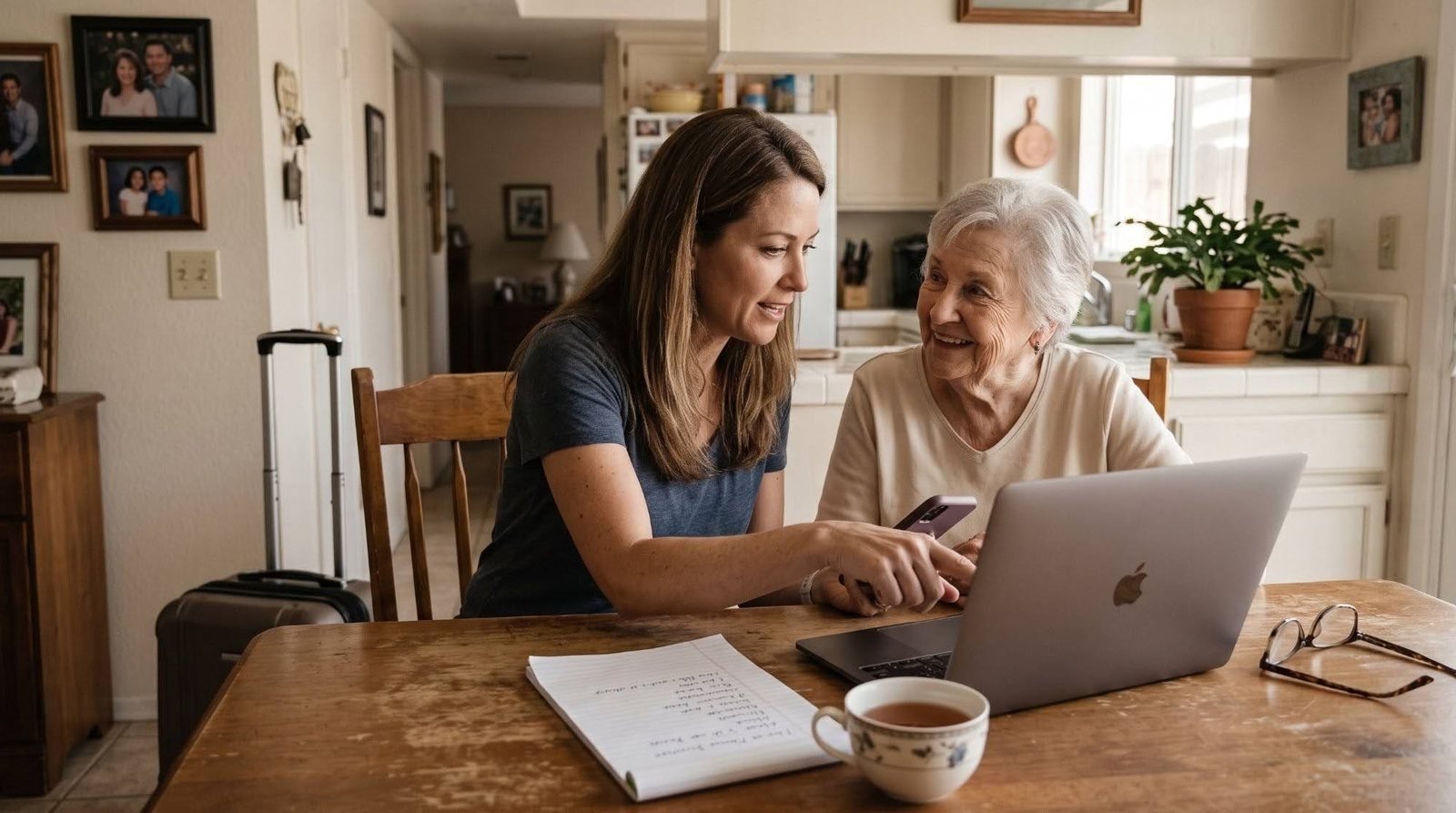
Computers · Blog
It's not that your mom isn't careful enough, it's that her computer was never actually set up to protect her.
4 min read Orange County & Laguna Woods
You clean it up. You run a scan, you delete the weird toolbar, you tell her not to click that popup again. Three weeks later, the browser homepage has changed to something you've never seen, there's a new icon on the desktop for a program nobody installed, and a message is flashing that her computer has a virus and she needs to call a number on the screen right now. You've been here before. You're going to be here again, unless something actually changes.
The instinct is to look for a better fix: a stronger antivirus, a longer scan, a stricter warning to be careful. None of that is the real problem. The real problem is that the computer is set up the same way it was the day she bought it, with no barriers between a convincing popup and a real install. Fixing that, not scanning harder, is what makes the viruses stop for good.
Every family we work with eventually asks some version of the same question: why does this keep happening to her and not to me? It's not intelligence. It's pattern recognition, and it's built two different ways. Someone who's spent thirty years online has absorbed, mostly unconsciously, what a fake urgent alert looks like versus a real one. Someone who came to computers later in life is applying the same trust rules that worked for decades of phone calls and mail: an official-looking message, a phone number, a sense of urgency, those used to mean something legitimate. Scam popups are built to exploit exactly that trust.
It's not a small problem, either. The FTC has found that people 60 and older are about five times more likely than younger people to report losing money to a tech support scam, with a median reported loss of $500, about 25% higher than what younger victims report losing. That's not a coincidence. It's a target that's been identified and is being worked.
The loop usually looks like this: a search for something ordinary, a driver update, a printer fix, a free version of a program, lands on a page dressed up to look official. A download button that isn't really a download button. A toolbar or "PC cleaner" installs itself alongside whatever she actually wanted. Not long after, a popup takes over the screen claiming the computer is infected and offering a phone number to call. Some families we work with have had a parent actually call that number and let a stranger take remote control of the machine.
Here's the part that matters most and gets missed the most: on most of these computers, the everyday account being used has full administrator rights. That means software can install itself with little more than a click, because there's no real permission gate in the way. The popup isn't just tricking her into clicking, it's clicking on a machine with the door already unlocked.
The most common next move is buying a paid security suite, sometimes literally the one advertised in the scam popup itself. We understand the instinct. It feels like doing something. But it's treating a symptom while leaving the actual opening wide open, and it adds a subscription, a renewal fee, and another confusing icon to a computer that's already overwhelming.
Windows Defender, the security software already built into every Windows computer, is free, well-rated, and updates itself automatically in the background. For the vast majority of home use, it's genuinely enough. The gap was never the brand of scanner. The gap is the setup underneath it.
Tired of the same cleanup
We can lock down the setup and walk your parent through spotting the fake alerts, right at their kitchen table, so this stops being a monthly phone call.
After several rounds of infections, a computer often has more going on under the hood than one scan can catch: leftover scheduled tasks that reinstall junk, a hijacked browser that keeps resetting itself, startup programs nobody remembers installing. At that point, another cleanup pass is just buying a few more weeks. A clean reinstall of Windows, done properly with her files backed up first, gets her back to a computer that behaves the way it should from day one, this time set up correctly instead of patched around old damage.
That's not a failure or a big deal. It's often the faster, more reliable option, and it's a normal part of what we do on an in-home visit when a machine has been through this cycle more than once.
This is one of the most common calls we get across Orange County, and now in Laguna Woods too: "my parent's computer keeps getting viruses, we've tried everything." A one-time remote fix from a grandkid or a shop across town gets the machine running again, but it leaves the setup untouched, so the same thing happens again in a month or two. What actually breaks the cycle is doing both things at once: locking down the setup, and building the habit of spotting a fake alert before clicking it, at her pace, in her own home.
A tech session runs $150 an hour, with $50 off the first visit, and that's what we spend it on: a clean, standard account setup, pop-up blocking turned on, Defender configured, and time sitting together practicing what a real warning looks like versus a scam one. She keeps a printed, plain-English guide afterward, so the next time something looks off, she has something to check against instead of a phone number flashing on the screen.
Ready when you are
Call or email, tell us what's giving your parent trouble, and we'll take it from there. No pressure, and no obligation.
(949) 994-2407Keep reading
Computers
A decision framework for adult children weighing cost and effort, not another list of the year's best laptops.

Online Safety
When it feels like everything is on fire, here's the exact order to do things in, and why it matters.
Online Safety
What the fake virus pop-up and the fraud department phone call actually sound like, and the five things to do in the moment if it happens to you.